
Opinion: B.C.’s economic security runs through our watersheds
September 25, 2026Opinion: B.C.’s economic security runs through our watersheds
September 25, 2026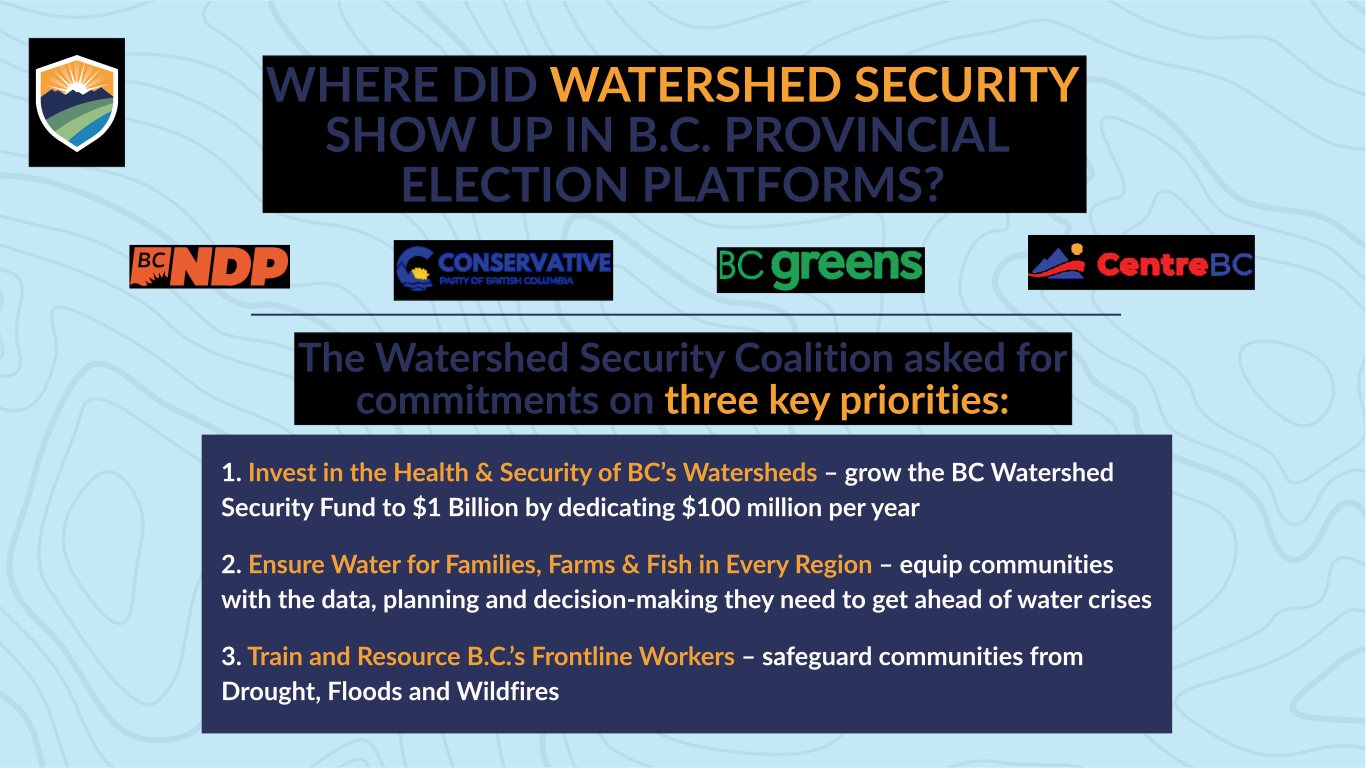
As British Columbians prepare to head to the polls on October 24th, watershed security is a critical issue for our province.
Every community and every major economic sector relies on water. We need it to drink, to grow our food, to run our industries and to power our province.
Clean, reliable water comes from healthy watersheds, which are critical infrastructure for B.C. communities. Wetlands, forests, aquifers and mountain snowpack filter, store and supply the water we depend on. These natural defences reduce flooding and wildfire risks, sustain rivers and fish during drought, and keep our communities and economy running.
Yet our watersheds are under growing pressure from climate change, population growth and rising water demand. Consecutive years of severe drought, wildfires and floods have already caused significant losses for farmers, First Nations, businesses and salmon runs across B.C.
In an uncertain world, with others eyeing our freshwater supplies, we cannot ignore these threats. Protecting our water is a matter of national security and sovereignty, and 90% of British Columbians agree that safeguarding Canada’s freshwater systems is vital to both.
See all political party election commitments to watershed security below:
BC NDP
- Strengthening watershed protection: $30 million per year to provide the BC Watershed Security Fund with sustainable, long-term funding and secure healthy watersheds and thriving communities for generations.
- Safeguarding our water from AI data centres: Setting strict new water-efficiency standards, mandated public reporting of water use, and requiring engagement with local communities on conservation and drought planning.
- Building BC Strong In Partnership With First Nations: Work together to protect watersheds, restore forests, and manage emergency and climate risks as partners.
- Expand the Youth Climate Corps: Invest $4 million annually to double the Youth Climate Corps for young people aged 17–30, connecting them with paid positions in climate resilience, ecosystem restoration, and renewable energy projects.
Read their full platform here: https://www.bcndp.ca/plan
BC CONSERVATIVES
No full platform or watershed security commitments released.
BC GREENS
- Modernize industrial water rental rates so that large industrial users pay a fair price for the water they use. Bring rates into line with other Canadian provinces, using Quebec as a minimum benchmark, while protecting household, agricultural and small-business users.
- Put the Watershed Security Fund on stable, long-term footing, with $75 million in annual funding supported by modernized industrial water rates. This will fund Indigenous and community-led watershed governance, monitoring, restoration, planning and local watershed jobs including work to support restoring the landscape’s ability to slow and store water, recharge aquifers, and cool waterways to protect aquatic life.
- Establish and fund regional watershed boards with First Nations, local governments and local water users to coordinate watershed planning, monitoring, restoration and proactive drought response, with meaningful authority over decisions affecting the watersheds they steward. Ensure major activities that affect watershed health, including forestry and development, are incorporated into watershed planning and accountable to watershed objectives.
- Use the tools within the Water Sustainability Act to their full potential where necessary, including critical environmental flow thresholds, responsive and flexible water license review and transfers, and water sustainability plans. Support communities and First Nations to lead these processes through locally driven monitoring and drought assessments, collective decision-making, planning guided by community objectives, and risk management strategies.
- Release and implement BC’s Watershed Security Strategy, developed with First Nations, with clear timelines, responsibilities, funding and annual public reporting on progress.
- Incentivize regenerative farming practices that build healthier soils, improve water management, reduce energy use and sequester carbon.
- Streamline the approvals process for water storage dugouts on farms to improve drought resilience and water availability.
- Commit the Ministry of Water, Land and Resource Stewardship to work with farmers to ensure the protection of food crops during drought periods.
- Put a moratorium on the construction and operation of AI data centres until a detailed public interest audit is developed and an appropriate regulatory regime is implemented. This will include consideration of access to electricity and other public resources, the economic value created in BC alongside electricity and water use, impacts on communities and the environment, and demands on other public infrastructure.
- Protect water resources for the benefit of people not profit, ensuring that drinking water, healthy ecosystems, and food security take priority over water use by AI data centres, industry, and bottled water companies.
- Develop flexible water-sharing and reallocation processes that respect Indigenous rights, protect critical environmental flows and allow communities to respond to changing conditions before water shortages become emergencies.
- Require major licensed water users to meter and publicly report how much water they actually use, and expand surface-water and groundwater monitoring across the province. Use that information to produce public water budgets and regular state-of-the-watershed reporting.
- Develop a provincial water storage strategy that helps regions prepare for increasingly limited water supplies, allowing them to continue to meet the needs of ecosystems, drinking water, and agriculture. This strategy should include guidance and resourcing to support the safe construction and management of community-scale storage, on-farm storage, and the natural storage capacity of the landscape.
Read their full platform here: https://bcgreens.ca/wp-content/uploads/2026/10/BCG_Platform.pdf
CENTRE BC
- Protect our watersheds. We will double the Watershed Security Fund to $200 million. It will support local projects for drinking water, salmon and flood protection. Farms need water security too: a farm water stream will help build reservoirs, irrigation, dugouts and aquifer recharge, starting in regions with repeated drought, and reach $15 million a year once the fund is doubled.
- Farmers will have a formal seat in watershed planning.
Read their full platform here: https://www.centrebc.ca/platform/